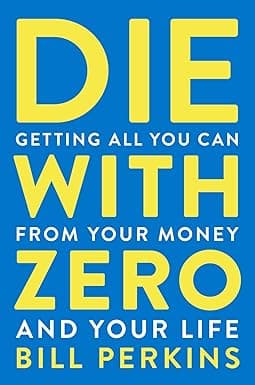
Die with Zero by Bill Perkins is one of the most contrarian personal finance books ever written. While virtually every financial advisor tells you to save more, spend less, and accumulate as much as possible before retirement, Perkins argues that this conventional wisdom produces a tragic outcome: people dying with millions of dollars they never used, experiences they never had, and a life half-lived in the name of a future that never arrived as imagined.
The book's central insight is that money is not valuable in itself — it is only valuable for what it can be converted into. And the most valuable conversion, Perkins argues, is experiences, which generate what he calls "memory dividends." Unlike physical purchases, which depreciate, experiences appreciate in psychological value over time. A great trip at 40 is still paying returns at 80 in the form of vivid memories, family stories, and a sense of having truly lived.
Perkins introduces the concept of "time buckets" — chunking your life into 5-year windows and identifying which experiences belong in each one. This framework exposes the deep irrationality of deferral: many experiences — climbing mountains, dancing at music festivals, backpacking through remote regions — require physical vitality that peaks in midlife and declines sharply afterward. Saving these for "retirement" is often saving them for a version of yourself who can no longer fully enjoy them.
The book also tackles inheritance and giving. Perkins argues that if you plan to give money to children or causes, doing so when recipients are young and can convert it into transformative experiences creates far more value than leaving an estate to people already in their 50s and 60s.
Die with Zero does not advocate recklessness — Perkins is clear about the need for a financial survival threshold and a cushion for health costs. But beyond that threshold, he makes a rigorous case that optimising for accumulation rather than fulfilment is a miscalibration of what money is actually for. The goal is not a large number in an account at death — it is a full, rich, memory-laden life that used every resource available.