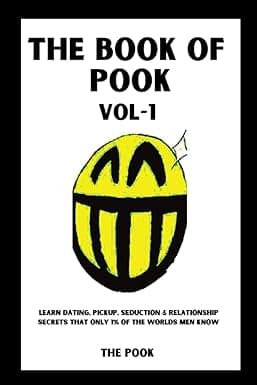
The Book of Pook is a self-published collection of essays, forum posts, and reflections written under the pseudonym "The Pook," originally shared online in the early 2000s before being compiled into book form. Despite its unconventional origins, it has become one of the most-referenced texts in masculine self-development circles, valued not for pickup techniques but for its philosophical depth on what it means to be a man.
The central thesis is deceptively simple: men who focus primarily on attracting women — who make female approval the organising principle of their lives — repel the very thing they seek. Pook calls this the "sickness" — a distorted orientation in which a man's sense of self-worth becomes contingent on external validation, particularly from women. The cure is not a better strategy for approaching women; it is a wholesale reorientation of the self toward purpose, competence, and integrity.
Pook draws heavily on historical literature, philosophy, and observation to build his argument. He invokes the idea that great men throughout history — artists, warriors, builders, thinkers — were not primarily motivated by romantic success. Their magnetism was a side effect of their total commitment to something larger than themselves. The lesson Pook draws is structural: the man with a burning purpose is fundamentally different in his posture, his presence, and his emotional availability from the man who is perpetually seeking approval.
The book also addresses what Pook calls the "nice guy" phenomenon — the man who suppresses his own opinions, preferences, and displeasure in order to avoid conflict and remain likeable. Pook argues this is both strategically counterproductive and, more importantly, a betrayal of the self. Authentic masculinity, in his framing, requires the courage to have convictions, to lead, to disagree, and to accept rejection without collapse.
The Book of Pook is best read not as a dating manual but as a challenge to examine whether your life is oriented around your own values or around the opinions of others. Its lasting influence lies in this philosophical provocation, which remains as relevant as when it was written.